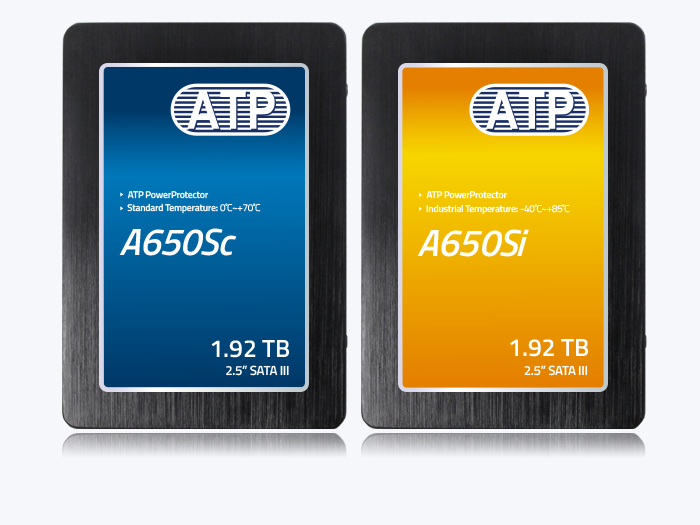
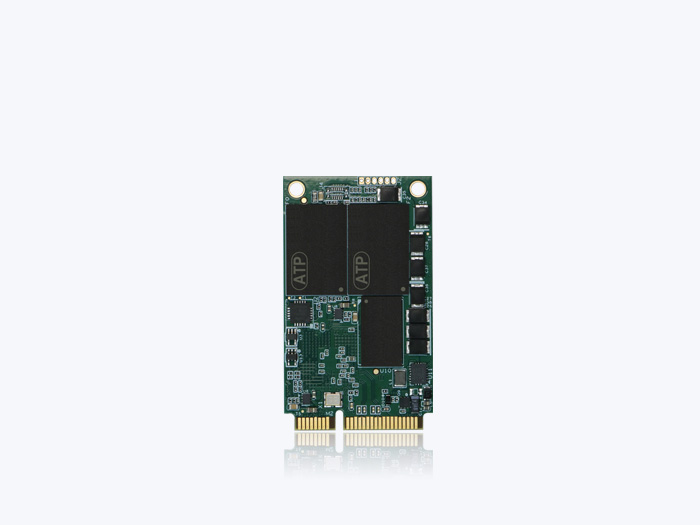
 ATP Pulse Reboot is a self-healing recovery layer for SSDs. An onboard microcontroller (MCU) watches the SSD controller through a continuous “heartbeat” handshake and triggers an autonomous power cycle the moment the controller stops responding — restoring operation with no host, no driver, and no on-site technician involved.
Key Takeaways
- It targets controller freezes and hangs — the failure mode that would otherwise force a manual reboot at a remote, unmanned, or hard-to-reach site. It is reactive recovery for an unresponsive controller, not a repair for worn-out or physically damaged media.
- False-trigger protection caps recovery at a maximum of three consecutive power cycles. If the controller still does not return, the SSD stops cycling and flags itself for inspection or replacement instead of looping indefinitely.
- During low-power and sleep modes the heartbeat exchange is suspended, so an SSD that is idle by design is never power-cycled by mistake.
Imagine a ravaged, post-apocalyptic world, where cities are fragmented and constantly threatened by supernatural creatures. You are the protagonist, and you have to deliver crucial cargo to rebuild strands of a network that will reconnect and unite these fractured cities to prevent humanity’s total annihilation.
To fulfill this mission, you need to traverse enemy zones and treacherous slopes. Time is of the essence, and you cannot afford a frozen system or a field-side reset. You need equipment that stays aware and self-stabilizes. Your unique ability: heal yourself and return to life.
While the scenario is obviously fictional, ATP Electronics channels the leading character’s resilience to its solid state drives (SSDs). Equipped with constant health sensing and the ability to perform controlled, autonomous reboots, ATP SSDs can restore themselves to operational state the moment they detect their own unresponsiveness.
The Challenge
When SSDs become unresponsive, the most typical and fastest temporary fix is to perform a reboot. Imagine, however, that your SSD is out there in space, in deep-sea energy exploration efforts, or in rugged and mountainous environments. Sending someone to perform the reboot could be arduous, time-consuming, and expensive; not to mention, operations will have to halt until the reboot is done, leading to costly disruptions.
The ATP Solution: Pulse Reboot Intelligent Self-Healing and Recovery Technology
Pulse Reboot is a self-healing technology that enables the SSD to monitor its health constantly and autonomously performs a reboot as soon as it detects a “freeze” event or when it becomes unresponsive.
By recovering without any human intervention, SSDs with Pulse Reboot ensure uninterrupted operation and quick responsiveness. This self-healing technology is particularly important for industrial and embedded applications where uncompromising reliability is essential amidst harsh, remote, and unmanned environments.
Emergency Measures for Restoring the Heartbeat
A robust heartbeat signifies life. When the heart stops, a medical intervention is performed, such as using a defibrillator or performing cardiopulmonary resuscitation (CPR) to restore blood circulation to the brain and other vital organs. Pulse Reboot works in a similar fashion.
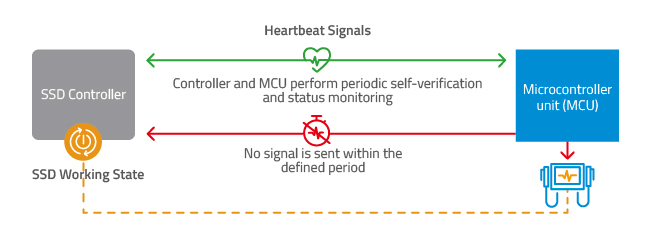
- The SSD controller sends a “heartbeat signal” to the onboard microcontroller unit (MCU).
- The onboard MCU acknowledges the signal in a continuous handshake loop to verify that the controller is functioning normally.
- If the signal is not received within the defined period, the MCU interprets this as a controller freeze. This time frame is the optimal interval balancing responsiveness and false triggers.
- Upon detection of the freeze, the SSD initiates a power cycle and reboots itself. This can be likened to the MCU acting as a defibrillator to revive the SSD back to its working state.
Pulse Reboot Features
- Post-Reboot Recovery. The handshake mechanism automatically resumes after the reboot. If the controller returns to normal operation, the SSD continues to function without user intervention.
- False Trigger Protection. Pulse Reboot uses fail-safe logic with multi-step handshake and reboot logic to minimize the risks of infinite loops and prevent unnecessary downtime. It requires a maximum of three consecutive power cycles before stopping to prevent further complications, signaling further investigation or the necessity of physical repair or replacement of the SSD.
- Power-Safe Mindfulness. During low-power and sleep modes, the controller and the MCU suspend the signal exchange to prevent accidental power cycling or reboots while the SSD is in an expected inactive state.
Pulse Reboot Benefits
- Automatic recovery from minor hangs without the need for human intervention.
- Minimized system disruption ensures the prompt resumption of mission-critical operations and maintains service quality.
- Enhanced system reliability and uptime with proactive SSD self-healing and recovery.
- Fail-safe reboot logic and false trigger protection minimizes unnecessary downtime.
- No host or driver dependency, as it leverages a devoted MCU that works with the SSD controller.
What Rugged Storage Technologies Prevent Downtime in Outdoor Edge Deployments?
Outdoor and edge deployments fail for reasons a climate-controlled data center never sees: wide temperature swings, vibration and shock, unstable or interrupted power, and — most decisively — no one on site to intervene. No single feature covers all of that, so rugged storage uptime is layered. Wide-temperature components keep the drive operating through cold starts and thermal extremes; power-loss protection guards data that is in flight when input power drops; robust ECC and bad-block management keep the flash media readable as it ages; thermal management prevents throttling or shutdown under sustained load; and SMART health monitoring gives operators early warning before a drive degrades to failure. ATP Pulse Reboot adds the recovery layer to that stack: when the SSD controller itself freezes — a state none of the media-level protections can clear — an onboard MCU detects the missing heartbeat and power-cycles the drive back to a working state on its own.
The value of that recovery layer scales directly with how unreachable the deployment is. For a drive in a serviced rack a few steps away, a manual reboot is a minor annoyance; for a drive in a remote substation, an offshore platform, or a vehicle in the field, the same freeze means a truck roll, halted operations, and hours or days of downtime. That is the deployment profile where autonomous self-healing earns its place in the specification.
Conclusion
ATP Pulse Reboot is a self-healing technology that allows SSDs to constantly monitor their health and autonomously perform a reboot when they detect a “freeze” event. This technology is particularly important for industrial and embedded applications using SSDs installed in harsh, remote, and unmanned environments.
With Pulse Reboot, performing a power cycle to restore the SSD back to normal function does not require human intervention, thus reducing maintenance expenses and preventing service downtime or disruptions that could lead to higher costs. For more information on the ATP Pulse Reboot Technology, visit the ATP website or contact an ATP Representative in your area.
Frequently Asked Questions (FAQ)
Q1: What is ATP Pulse Reboot?
A: Pulse Reboot is ATP’s self-healing recovery technology for SSDs. An onboard microcontroller (MCU) exchanges a continuous “heartbeat” handshake with the SSD controller; if the controller stops responding within the defined interval, the MCU treats it as a freeze and triggers an autonomous power cycle that restores the drive to a working state. It runs without host or driver involvement, which makes it suited to industrial and embedded systems in harsh, remote, or unmanned locations.
Q2: What rugged storage technologies prevent downtime in outdoor edge deployments?
A: Outdoor edge uptime comes from a layered set of technologies, not one feature: wide-temperature components for thermal extremes, power-loss protection for unstable input power, robust ECC and bad-block management to keep aging flash readable, thermal management to avoid throttling, and SMART monitoring for early warning. ATP Pulse Reboot adds the recovery layer — it autonomously power-cycles the SSD when the controller freezes, so a remote or unmanned site does not require an on-site technician to clear a hang.
Q3: How many times will Pulse Reboot try to recover before stopping?
A: A maximum of three consecutive power cycles. Pulse Reboot uses fail-safe logic with a multi-step handshake to avoid false triggers and infinite reboot loops; if the controller has not returned to normal after three cycles, the SSD stops cycling and signals that physical inspection, repair, or replacement is needed. This prevents a genuinely faulty drive from masking the problem behind endless reboots.
Q4: Does Pulse Reboot require host or driver support?
A: No. Pulse Reboot runs on a dedicated onboard MCU that works directly with the SSD controller, with no host or driver dependency. Because the monitoring and recovery happen entirely on the drive, it functions the same way across operating systems and in headless or unmanned systems, and the handshake automatically resumes after a reboot so the drive keeps protecting itself without user intervention.